How Did We Get Here?
 In the past decade, we have seen a new type of brand emerge from the e-commerce landscape. We’re talking about the growth of direct-to-consumer (DTC) brands (like Casper, Dollar Shave Club, Warby Parker, Glossier, etc.). Credit these brands for finding and filling product gaps thanks to a customer-direct approach while skipping the headaches and bureaucracy associated with brick-and-mortar retail distribution and selling via marketplaces.
DTC brands still face numerous challenges though. In many cases, after factoring in the rising customer acquisition costs (CAC) – bottom-line results can prove to be underwhelming. And as a percentage of total sales and revenue for a given product category, the DTC channel is still a drop in a much larger retail bucket.
DTC brands grew quickly during the late 2010s when venture capital was plentiful and customer eyeballs were readily accessible via social media – especially Facebook advertising. Fast forward to the 2021 iOS privacy update which severely impacted social media advertising – and now a looming recession – and it’s obvious these brands no longer enjoy the smooth sailing they once did.
In this article, we will discuss the basic differences between direct-to-consumer and Amazon marketplace-native brands. We’ll also begin to cover the rationale and logic behind why these brands should seek to build business away from the Amazon marketplace. And we’ll close with that opportunity we’ve already deemed THE biggest opportunity of this year.
The Current Chaos
 Let’s begin by addressing the current chaos facing DTC brands. In the most simple terms, the entire sector faces crazy, ridiculous, and downright astounding customer acquisition costs. Much of these costs can be attributed to poor digital marketing efficiency. Translation: Not enough new customers! Marketing and advertising a DTC brand to a large audience is difficult. And it’s also tough to encourage those consumers to convert to purchasers. To make matters worse, in 2022 many DTC brands saw those new customers they’d previously converted, churn out of play.
Direct-to-consumer brands leverage Shopify and other software as a service (SaaS) platforms like BigCommerce and WooCommerce, to build their brand websites via scalable and quality web development access at an affordable price.
In many, these D2C brands have also resisted selling via marketplaces like Amazon due to the perception that marketplace participation would somehow negatively impact brand equity. Let’s hope this does not prove to be a fatal mistake. Based on December 2022, Retail Touchpoints special report, it’s clear that consumers rely upon marketplaces just like Amazon, to discover new brands. This means that if a DTC brand is not part of a marketplace, those products are less likely to be discovered.
In contrast to DTC brands, marketplace-native brands are in their most basic form – brands that were created and designed to effectively (or functionally) only be available to marketplace consumers buying items on Amazon. These brands are built on SEO, keywords, and “white space” opportunities to rank high in Amazon search results. But beware, these particular Amazon waters can be especially treacherous. In fact, a major concern of marketplace-native brands is the very real fear that Amazon might launch an Amazon private-label version of their very same product (hello Amazon Essentials).
It’s our position that these marketplace-native brands, similar to DTC brands, may be suffering from a myopic business vision when or if, they fail to recognize the opportunity to strategically leverage Buy with Prime to build their brand’s businesses away from Amazon by strategically using the best parts of Amazon to augment their own ecommerce business.
We’re confident that in 2023 marketplace-native brands will begin to embrace and leverage Buy with Prime to find new audiences. Of course, the other benefit is that thanks to the data brands own they’ll also be marketing to these new-to-brand consumers via email after they’ve made a purchase via Buy with Prime.
 No surprise, but as marketplace-natives, these brands are familiar and comfortable with both the good and bad of Amazon. When these brands rely on that experience combined with Amazon’s legacy of innovations and their own scrappy presence, they’ll be positioned to grow their market share.
It’s our view, on the other hand, that DTC brands built on Shopify and other SaaS platforms will play it safe while opting to wait and see how things shake out with Buy with Prime. It is worth noting that as of early 2023, only BigCommerce has created a native solution to help merchants easily adopt and try Buy with Prime. At the end of January 2023, Amazon will open the Buy with Prime program to US sellers.
Turning Chaos Into Opportunity
One of the more interesting developing stories in 2023 is how marketplace-native brands will leverage Amazon’s advertising platform to grow business – and get this – to grow businesses away from the Amazon marketplace. It is as simple as creating a compelling e-commerce website via Shopify, BigCommerce, or Woocommerce. And then, this is important, focusing on sending traffic to the site via Amazon advertising.
What makes Amazon’s advertising so interesting in 2023 – is the opportunity to use it to drive customers off of Amazon. Google, Facebook, and “traditional” advertising solutions do not offer a complete funnel experience – from search to purchase. The opportunity to design and create advertising audiences to target Prime customers (now more than 200 million worldwide!) and to send that traffic to a brand’s DTC website should be considered a HUGE assist for marketplace-native brands seeking to build and strengthen real direct-to-consumer businesses – and again, without the hassles and expense of customer acquisition and logistics – thanks to Buy with Prime.
In summary, marketplace-native brands have a massive opportunity in 2023! They should utilize Amazon’s own advertising and logistics tools. And use them to grow businesses that are out of the reach of Amazon’s marketplace management team. Expect a deluge of direct-to-consumer brands to jump towards Buy with Prime once Amazon Advertising becomes more adopted and ubiquitous.
We understand that parsing data, considering marketing options, and at the same time, building a brand is a huge effort. If you’re seeking answers and assistance to challenging questions like these – we would welcome the chance to be your resource. We know that we’ll have a lot to talk about. Please reach out to Equity Commerce so we can start today!



 Here are a few tips designed to help vendors prepare for AVNs.











 Welcome to Part 2. In the
  This requires nimble teams on the brand side that understand the need and often the urgency, for aggressive product pricing to move products out of facilities.
 A third storm element (and one with even bigger waves) creating challenges for sellers is the status of warehouse space at Amazon fulfillment centers for brands leveraging Fulfillment by Amazon (FBA). Running lean is the answer. In fact, if products are sold via FBA – the goal should be to turn that inventory before 60-90 days. The longer items remain in FBA warehouses, the larger the costs of storage in addition to sunk costs of business capital that cannot be accessed until the items are sold.
  If you feel the need for an experienced sailor – the team at
 apparent that Amazon wants to share (if not
  building an online catalog and Bezos and team were able to quickly create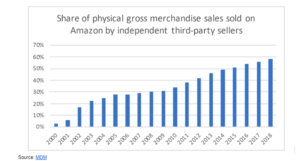
 No secrets here, but Amazon has invested heavily. First in its logistics and warehouse network (aka “the moat”) and more recently in its advertising capabilities. The company is famous for solving internal problems first and then offering these same services to outside third parties to generate additional revenues. Think about Amazon Web Services or AWS – and how Amazon created it internally and oh by the way, essentially invented a new type of business based on selling cloud infrastructure. Amazon is in an enviable and unique position in that it can offer access to other businesses to leverage its logistics network and advertising solutions. Oh and the cherry on top? This also negatively impacts rivals such as Shopify and Google.
  advertising solution that also owns transactional data (now almost three decades worth) that has been curated from customer product searches to customer purchases. This data in turn enables a compelling advertising engine for sellers and brands to efficiently and intuitively target Amazon’s most valuable customers, Prime members (now more than 200 million worldwide!).

 decide between discretionary spending and non-discretionary spending. Non-discretionary spending refers to items necessary for daily life – rent/mortgage, bills/utilities, groceries, etc. Examples of
  further away. However, you may see new emerging competitor brands selling the same items. Brand owners in this category will require strategy, innovation, and deeper analytics to drive profits on low-margin products. And as noted above, selling quantity packs or bundles will serve to increase the average order value. It’s also critical to have an awareness and understanding of how your margins may be impacted by logistics and marketing costs. Brands and sellers in this category MUST constantly factor in margin and profitability. A failure to thoroughly consider economics could result in flat loss-leaders and/or barely hitting break-even points.

 Costs of Logistics and Customer Acquisition: The Two-Headed Beast!
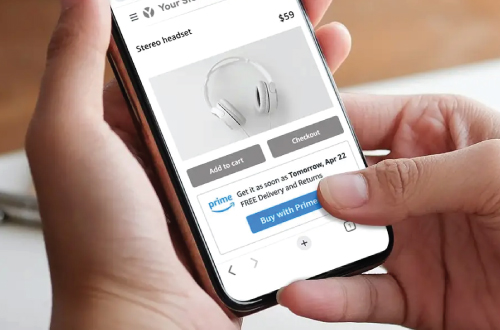
 By using familiar Amazon Prime logos and icons on DTC product detail pages and websites, brands, and sellers can quickly communicate a sense of trust to consumers who might be new to the brand and/or first-time visitors to the brand website. Buy with Prime also brings additional value and consumer confidence since it enables DTC brands a quick and recognizable payment and checkout option via